
What Makes a Modern Retail POS System Worth the Investment?
Today’s POS is the operational backbone of retail — connecting sales, inventory, customers, and finance into one unified ecosystem.

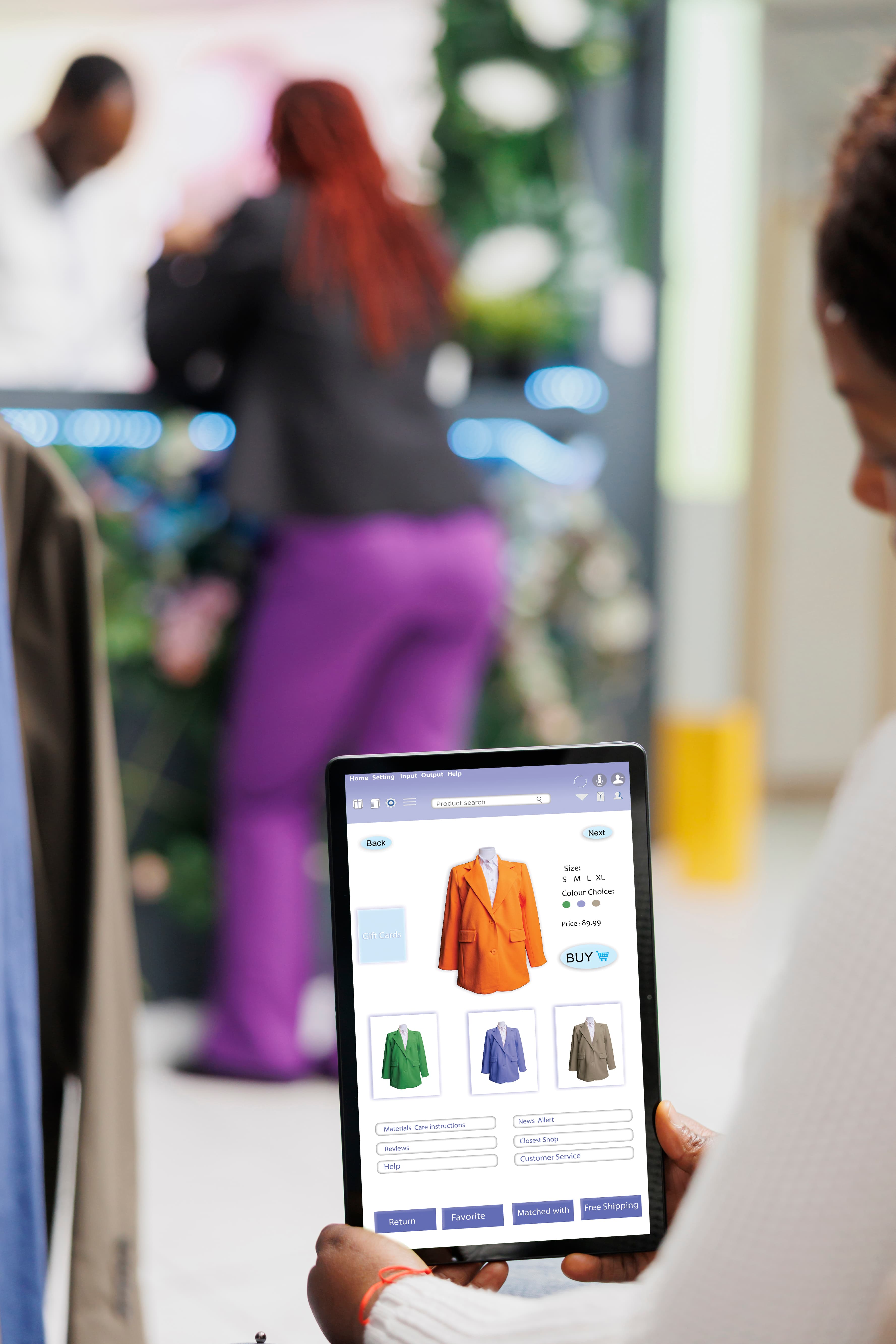
Retail has changed dramatically over the last decade, and you might be wondering: what makes a modern retail POS system worth the investment? For starters, customers now expect seamless shopping experiences across physical stores, eCommerce platforms, mobile devices, and even social channels. A modern POS system can certainly be the answer to those demands. Let’s dive deeper.
The fact is, for many organizations the traditional point-of-sale system is no longer enough.
A modern POS system, on the other hand, has evolved far beyond processing transactions. Today it serves as the operational backbone of retail businesses — connecting sales, inventory, purchasing, customer data, reporting, and financial management into one unified ecosystem.
For CEOs, CFOs, and retail operations leaders, choosing the right POS platform can directly impact profitability, scalability, and customer experience.
Let’s Outline Some of the Retail Challenges
Whether managing apparel stores, home décor showrooms, specialty retail chains, grocery operations, or franchise locations, businesses face common operational challenges:
- Inventory inaccuracies across locations
- Long checkout times and poor customer experiences
- Lack of real-time reporting
- Disconnected eCommerce and in-store systems
- Manual inventory management processes
- Limited visibility into margins and purchasing trends
- Difficulty scaling operations across multiple stores
This is where a modern retail POS system becomes critical.
What Is a Modern POS System?
A modern point-of-sale system is a fully integrated retail management platform that combines:
- POS transactions
- Inventory management
- Customer relationship management (CRM)
- Purchasing and replenishment
- Financial reporting
- Loyalty programs
- Omnichannel commerce
- Warehouse and supply chain management
Rather than functioning as a standalone cash register, modern POS systems provide retailers with centralized control and real-time operational visibility. Solutions such as LS Retail are designed specifically to help retailers unify operations across stores, warehouses, and digital channels.
Built on Microsoft Dynamics 365 Business Central, LS Retail combines POS and ERP capabilities into a single platform — eliminating the disconnect between front-end retail operations and back-office business management.
Reasons a Modern POS System Is Worth the Investment
1. Real-Time Inventory Visibility
One of the biggest pain points in retail is inventory uncertainty. A customer may see a product online marked “in stock,” only to discover it is unavailable in-store. Meanwhile, another location may be overstocked with the same item. Modern POS systems solve this problem by synchronizing inventory across all locations in real time. If a customer cannot find a size in one location, staff can quickly locate it elsewhere and arrange a transfer or direct shipment — creating a positive experience.
2. Omnichannel Integration
Today’s consumers move seamlessly between online and in-store shopping experiences. Retailers need systems that support this behavior without operational friction. Modern POS systems should integrate eCommerce platforms, mobile purchasing, buy online / pick up in-store, and returns across store locations.
3. Faster, Smarter Decision-Making
Executives no longer want to wait for end-of-month spreadsheets to understand performance. Modern POS platforms provide real-time dashboards and analytics that help leadership teams monitor sales trends, identify which products are performing better than others, and track gross margins and seasonal demand fluctuations. A CFO reviewing margin performance across multiple locations can identify underperforming product categories instantly and adjust purchasing decisions before inventory becomes dead stock. This level of visibility transforms retail operations from reactive to proactive.
4. Operational Efficiency Through Automation
Retail businesses often lose time and money through manual processes. A modern POS allows for automations such as purchase orders, replenishment orders, and pricing updates. For example, a specialty grocery retailer using LS Retail can automatically reorder high-demand products based on predefined inventory thresholds and sales trends. This reduces human error and administrative workload, freeing up staff time for other tasks.
5. Scalability for Growth
As retailers grow, operational complexity increases quickly. Opening new locations, expanding eCommerce operations, or managing franchises becomes difficult with disconnected systems. Modern POS systems should scale alongside the business while maintaining centralized visibility and control. For example, a growing franchise retailer can onboard new stores into LS Retail using standardized processes, pricing structures, and reporting frameworks — without rebuilding systems from scratch each time.
Why Integration Matters With the Right Partner
Technology alone does not guarantee success. The real value of a modern POS system comes from how effectively it integrates with the broader business operation — including finance, supply chain, reporting, and customer management.
This is why retailers increasingly work with experienced Microsoft partners who understand both the technology and the operational realities of retail businesses. An integrated solution helps organizations:
- Enhance customer experiences
- Improve reporting accuracy
- Gain stronger financial visibility
- Support long-term scalability
For decision-makers, choosing the right implementation partner can be just as important as selecting the software itself. Learn more about our retail ERP solutions and how Qixas helps retailers modernize.
About the Author

Nick Detmer
Client Technology Strategist, Qixas Group
Nick advises mid-market companies weighing ERP and CRM decisions. His career spans every side of the Dynamics ecosystem, which gives him a rare 360° view of how these projects actually go. Clients lean on him when the stakes are high and the timeline is short — which is how his team earned the “Dynamics SWAT Team” nickname.
- ERP Selection
- Retail & Hospitality
- Dynamics 365
- Business Case & TCO
Frequently asked questions
What makes a POS system “modern”?
It is a full retail management platform rather than a cash register — combining POS transactions, inventory, CRM, purchasing and replenishment, financial reporting, loyalty, omnichannel commerce, and warehouse management in one system.
How does a modern POS fix inventory inaccuracy?
By synchronizing stock across every location in real time. When a customer cannot find a size in one store, staff can locate it elsewhere and arrange a transfer or direct shipment instead of losing the sale.
Is LS Retail the same thing as Business Central?
No, but they are built together. LS Retail runs on Microsoft Dynamics 365 Business Central, which is what removes the usual disconnect between front-end retail operations and back-office business management.
What is the return on a POS investment?
It shows up in three places: recovered sales from accurate cross-location inventory, lower administrative cost from automated purchase orders and replenishment, and better buying decisions from live margin data instead of end-of-month spreadsheets.
Read next

Why Modern POS Systems Are Essential for Today's Hospitality Industry
Guests expect seamless, personalized experiences at every stage of their stay. See how integrated modern POS systems help hotels connect guest services, operations, and data into one unified platform.
Read more
How the Right ERP Software Can Solve ALL Your Retail Inventory Challenges
Inventory is both a retailer's biggest asset and biggest risk. See how modern ERP solutions like LS Retail eliminate stockouts, dead inventory, and manual errors with real-time visibility and automation.
Read more
Best ERP Solutions for Multi-Property Hotel Management
How modern ERP and hospitality management solutions help hotel groups centralize finance, inventory, and guest experience across multiple properties for real-time operational visibility.
Read moreReady to modernize your retail POS?
Get a clear read on where your current systems are holding you back — and how a unified POS and ERP platform can move you forward.
Book a Retail Assessment